
Digital Cameras: Does Pixel Size Matter?
Part 2: Example Images using Different Pixel Sizes
(Does Sensor Size Matter?)
by Roger N. Clark
All images, text and data on this site are copyrighted.
They may not be used except by written permission from Roger N. Clark.
All rights reserved.
NOTE: This is part 2 in a series on Does Pixel Size Matter?.
Part 1 is at:
Digital Cameras: Does
Pixel Size Matter? Factors in Choosing a Digital Camera.
Introduction
The noise in good modern digital
cameras is dominated by photon counting statistics, not other sources.
Why this is important is that because of this fundamental limit,
performance properties of digital cameras can be predicted and
the results modeled with simple equations. This performance level
is called photon noise limited and is the best that can be achieved.
This is explained in detail at:
The Signal-to-Noise of Digital Camera images and Comparison to Film.
So far, all modern digital cameras tested in
the last few years have noise that is dominated by photon noise at signal
levels above a few tens of photons. For example, see sensor analyses
and further references at:
http://clarkvision.com/reviews/.
This web page shows example images that illustrate differences in
performance between a camera with large pixels and one with small
pixels. Note, however, that small versus large pixels do not
control the noise. Rather it is the lens that delivers the light.
Cameras with small sensors generally have smaller pixels and smaller
lenses. It is the smaller lens that delivers a smaller amount of light
to those small pixels.
Ignore the color balance differences in the images in this article,
and examine the noise. A small pixel can not collect as much light as a
large pixel, much like different sized buckets in a rain storm: the large
bucket collects more water. But how much? For the range of cameras
tested so far, that range amounts to a factor of about 16. The effect
of this ability is the small pixel camera with its smaller lens
operating at a low ISO of 100 is like operating a large pixel camera at
ISO 1600, because the larger camera generally has a larger lens.
The example images of a night scene showing Waikiki Beach and the city
of Honolulu illustrate these effects.
Full Scenes
Figures 1 through 4 show two different exposures with two different
cameras of the Honolulu night scene. The large pixel camera, a Canon 1D
Mark II DSLR has pixel spacing of 8.2 microns, so the pixel active area
is a little smaller than 64 square microns. The Canon S70 camera has
a pixel spacing of 2.3 microns, and an active area less than 5 square
microns (probably less than 4). The focal lengths for the two cameras
were selected to give approximately the same field of view considering
the different aspect ratios of the two cameras, and the limited ability
to finely zoom the S70. The full scenes look reasonable in image quality,
but one can not tell the details of the noise. For that we need full
size examples. In comparing images, ignore the color balance differences
between cameras. All images on this page were taken at the same
f/ratio, as commonly done by photographers comparing cameras. But
constant f-ratio is NOT the same amount of light. This is a common
misunderstanding of f-ratios. Constant f-ratio means constant light
density in the focal plane (e.g. photons [per square micron). With
constant f-ratio, as focal length increases, the lens aperture diameter
increases and the lens collects MORE light from the subject This
means the smaller camera had a smaller used a lens that collected less
total light than the larger camera, as the both used the same f-ratio.
In this series of comparisons, I'll describe the true reasons for the differences in
noise. The true differences in apparent noise are due to the amount of light collected
by each camera. The common internet cited reason for the larger sensor camera
is that the sensor is responsible. No, it is the lens. The sensor is just
a receptacle to hold the photoelectrons. The analogy is a water bucket: the reason
for the amount of water in the bucket is how fast and for how long you poured water in the bucket. The
size of the bucket only determines when/if the water will fill and overflow the bucket.
Another cited reason for the difference in noise is the larger pixels need more
light to fill the pixel. That is a consequence of large pixels, not a reason for noise.
Noise is the square root of the number pf photons (photoelectrons in the pixel), and that
is independent of how full the pixel is.
Another commonly misunderstood factor is ISO. Some photographers believe ISO changes
sensitivity. it does not. ISO changes gain and the recorded number values in the
digital image files so gives an illusion of sensitivity. ISO is a post sensor
gain and selection of a range of light to digitize. See
What is ISO on a digital camera? for more information.
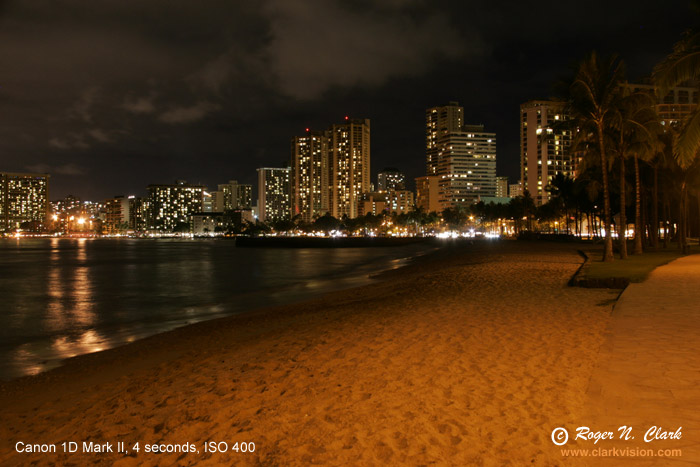
Figure 1. Honolulu night scene with a large pixel camera, 4 seconds
and iso 400, f/7.1. Image from camera defaults with no post processing
modifications.
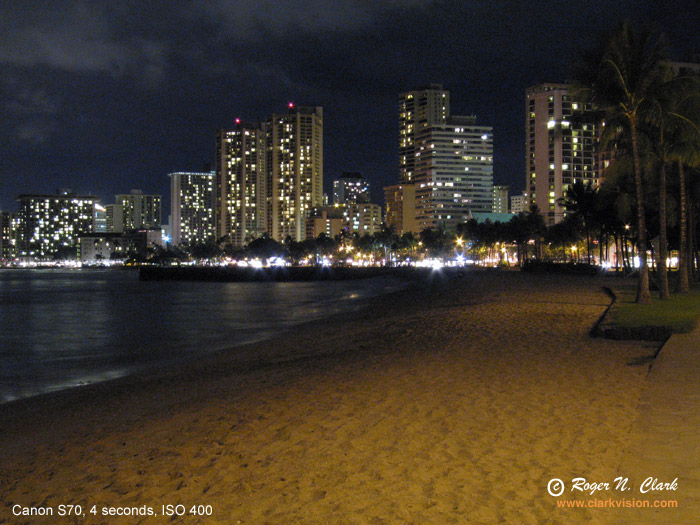
Figure 2. Honolulu night scene with a small pixel, small lens camera, 4 seconds
and iso 400, f/7.1. Image from camera defaults with no post processing
modifications.
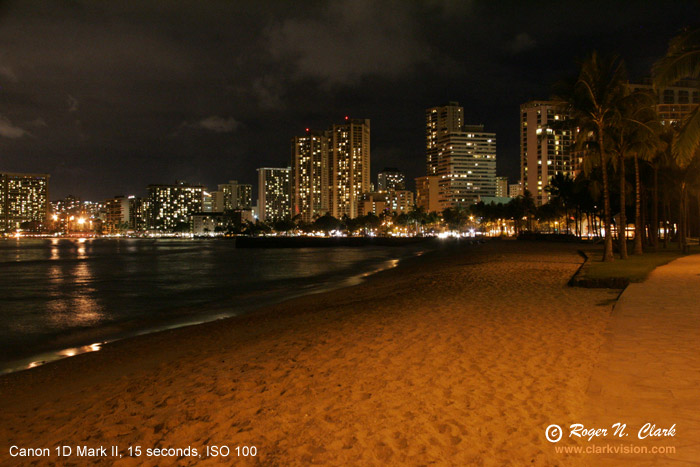
Figure 3. Honolulu night scene with a large pixel camera, 15 seconds and iso
100, f/7.1. Image from camera defaults with no post processing
modifications.
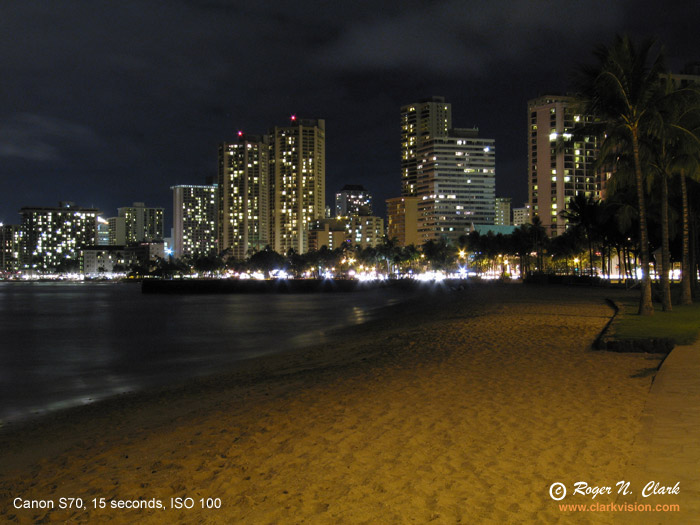
Figure 4. Honolulu night scene with a small pixel, small lens camera, 15 seconds and iso
100, f/7.1. Image from camera defaults with no post processing
modifications.
Full Scale Image Crop Comparisons
The above images are really too small to see the full image
quality, so let's compare side-by side image crops at full scale
(Figures 5 through 9). Figure 4 shows the image quality
at ISO 400 with the exposure and f/stop the same on the two
cameras. Note the noise in the small pixel (S70) camera
compared to that in the large pixel camera.
The higher signal-to-noise ratio of the image data from the
large pixel camera allows the image to be enhanced to bring out
subtle details (Figure 6). If the same enhancement was done to
the small pixel camera image, the result is poor (Figure 7).
The reasons for the differences is due to what is called the Etendue.
Etendue is the lens aperture area times the pixel solid angle and is
described in more detail here. The detail on the subject (assuming quality
lenses) occurs when the pixels on the subject are the same. For this example, I tried
to make the pixels on the subject the same by choosing the appropriate focal lengths on the cameras.
You can see from the images, that they are close, within a few percent, but not exact.
The units of Etendue cited on each image is lens aperture area in square centimeters times
pixel angular area in square arc-seconds. See the above link for how that is computed.
The noise in the images are the same, when the
Exposure Factor, CEFA are equal. The CEFA is Etendue * exposure time
in units of square centimeters, square arc-seconds, and time. When the
pixels on the subject are the same with equal lens angular resolution,
and the CEFAs are equal, then the images will have the same apparent
noise and detail on the subject. They will appear equal regardless
of camera size. (Ignore color balance differences in the following
examples.)
In Figures 5, 6, and 7 are the two images made at ISO 400, f/7.1 and
4 seconds of exposure. We see that both the Etendue and Etendue *
exposure time are smaller for the small sensor S70 camera than the larger
1D Mark II camera. Reducing the exposure by 4 times for the large pixel
camera (Figure 8), roughly the ratio of the crop factors (S70 = 4.8x, 1D2 = 1.3;
ratio of crop factors = 3.7) still does not produce equivalent noise
images because the Etendues are still not the same.
Finally, to get close to the same light levels (and Etendue * time), the S70 exposure
time was increased to 15 seconds. Now the Etendue * time factors are within
16% of each other and we see that the noise is very similar.
(Technical. In the following examples, the angular size of the pixels are:
S70: 42 arc-seconds and 1DII: 56 arc-seconds, as close as I could set them
on site on the zoom lenses I was using. The lens aperture areas were:
S70: 0.020 square cm, and 1DII: 0.145 square cm.
Etendue for the S70 = 0.020 * 422 = 35.3 cm2 arc-seconds2.
Etendue for the 1DII = 0.145 * 562 = 455 cm2 arc-seconds2.
It is the large difference in Etendue that is responsible for the performance
difference. And because the pixels on subject are very close to equal, the
cause in performance difference and perceived noise is due to the lens aperture area.)
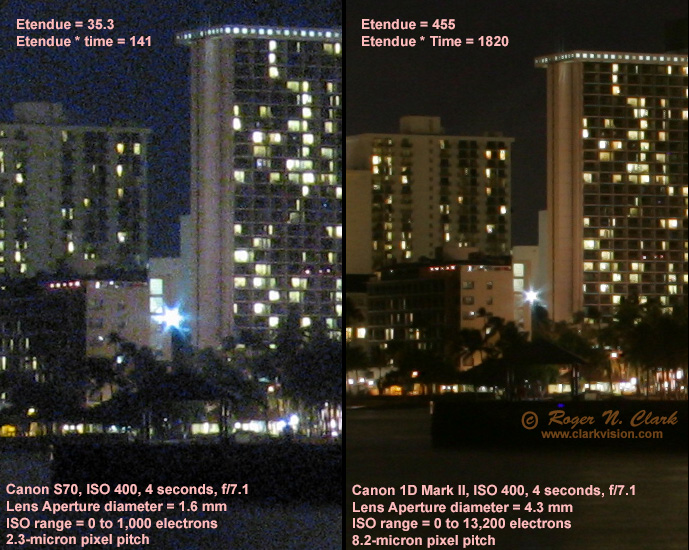
Figure 5. Full scale crop comparisons of the night scene taken with
the same exposure, f/stop and ISO for both cameras.
Image from camera defaults with no post processing
modifications.
The Etendue * Time for the 1D2 image is 12.9 times higher,
so the noise is 3.6 times better (square root(12.9).
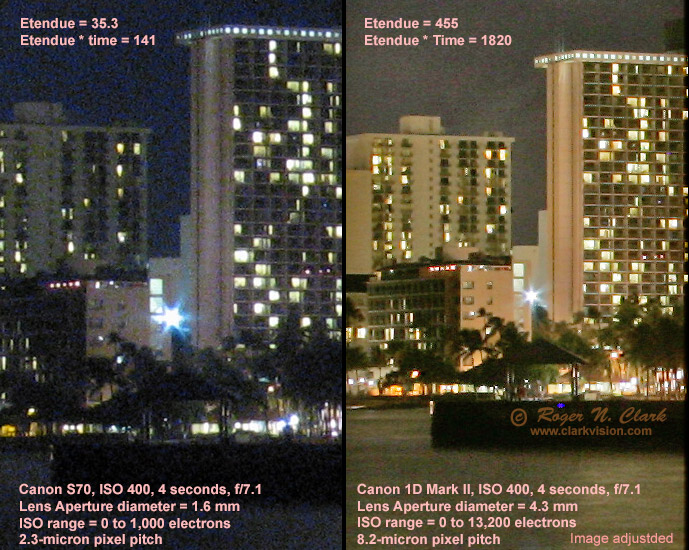
Figure 6. Full scale crop comparisons of the night scene taken with
the same exposure, f/stop and ISO for both cameras, from Figure 5.
Image from camera defaults with no post processing
modifications on the small camera, but adjusted to show more details
in shadows and highlights in the large camera image. Processing
included: photoshop CS2 shadow/highlight (50% shadow, 30%
highlight), small curves adjustment and unsharp mask.
The Etendue * Time for the 1D2 image is 12.9 times higher,
so the noise is 3.6 times better (square root(12.9).

Figure 7. Full scale crop comparisons of the night scene taken with
the same exposure, f/stop and ISO for both cameras.
Both images were adjusted in the same way to show more details
in shadows and highlights in the large camera image. Processing
included: photoshop CS2 shadow/highlight (50% shadow, 30%
highlight), small curves adjustment and unsharp mask. The small
pixel camera has so much noise because less light was collected
by the smaller aperture lens and the adjustments are detrimental
to the small camera image but not the large camera image.
The Etendue * Time for the 1D2 image is 12.9 times higher,
so the noise is 3.6 times better (square root(12.9).
The large pixel camera enables one to take higher ISO images and
still maintain higher image quality over the small pixel camera
(Figure 8) because a larger lens aperture area is used which delivers
more light in the same exposure time.
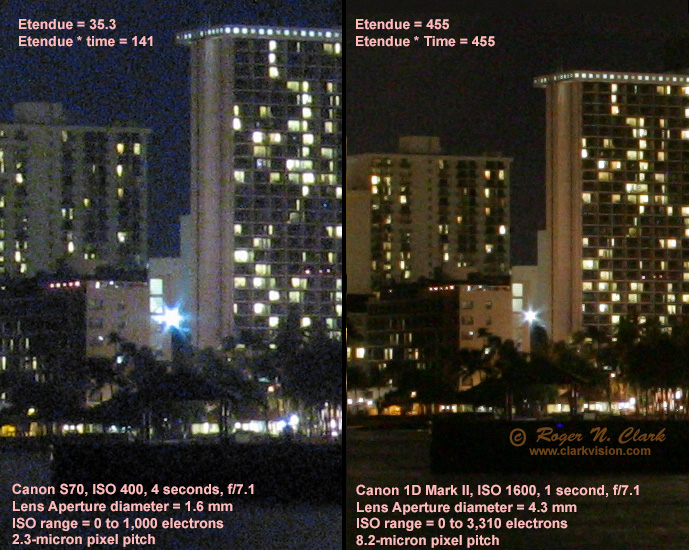
Figure 8. Large and small pixel cameras compared with the same
f/stop but the large pixel camera was boosted 4x to ISO 1600 and the
exposure reduced 4x to 1 second. The large pixel camera still
shows lower noise, because the lens delivers more light.
Image from camera defaults with no post processing
modifications. The Etendue * Time for the 1D2 image is 3.2 times higher,
so the noise is 1.8 times better (square root(3.2).
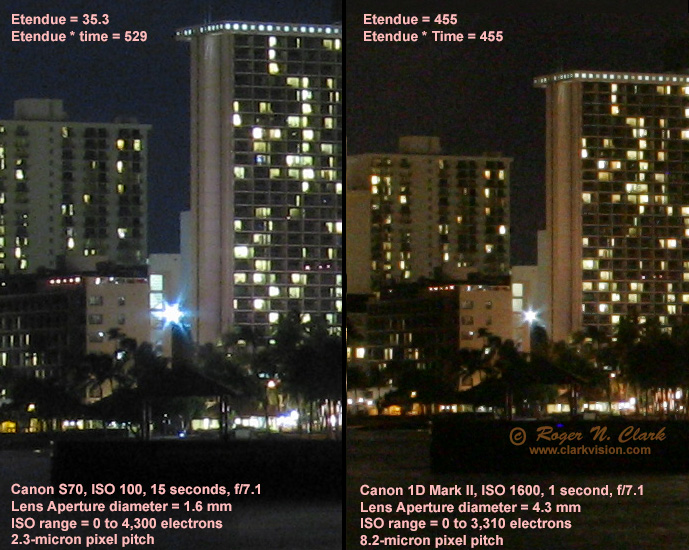
Figure 9. Large and small pixel cameras compared where the ISO
and exposure times were adjusted to give similar image quality.
The large pixel camera was boosted to ISO 1600 and the
exposure reduced to 1 second. The small pixel camera ISO was
reduced to 100 and the exposure time increased to 15 seconds.
The images from the two cameras have similar noise because the
lenses and exposure times delivered essentially the same amount
of light to their respective sensors (the Etendue * Time are within 16% of each other).
Image from camera defaults with no post processing
modifications.
Discussion and Conclusions
The reason why the large pixel camera does so well compared to the
small pixel camera is basic physics of how the cameras collect
light. The lens collects the light and photographers tend to use smaller
aperture diameter lenses on small cameras. The S70 point and shoot camera used in
the above examples has an aperture diameter of only 1.6 mm, while the larger
camera had 4.3 mm diameter lens, and both at f/7.1. The area difference
between these two lenses is the cause of the amount of light collected
(not the sensor).
In this example, we could have equalized the lens aperture area if we opened the
S70 camera lens to give a 4.3 mm aperture. That would be f/2.6. At f/2.6, the
S70 lens would collect the same amount of light per pixel and show the same noise
in the same exposure time. In that case, the pixel on subject would be very plose,
the apparent noise per pixel would be very close, and the depth of field would be very close.
An example of such equalization was shown in Figure 6 of part 1 of this series.
Another factor in low light performance is fixed pattern noise, especially
banding noise. A camera with large pixels and great sensitivity is of
little use for low light work if the image is marred by banding noise.
See
http://clarkvision.com/reviews/ for more information on banding and other
noise sources/
The ISO is defined differently between cameras.
Camera manufacturers define the number
of photons collected for each camera differently so we see
the same numbers in our image files. For example, in the
small pixel size camera, a smaller number of photons gives
maximum signal (e.g. number 255 in an 8-bit image) than a larger
pixel size camera. A specific example using the cameras
used for the images on this web page: a Canon S70 with 2.3
micron pixel pitch produces images where 255 in an 8-bit
image corresponds to about 4,300 electrons, but in a 1D Mark II
with 8.2 micron pixel pitch gets about 53,000 electrons
at number 255 in the 8-bit image, when both cameras are set
to ISO 100.
You can compute the approximate ISO factor change
between two cameras by squaring the ratio of the pixel pitches, e.g.
for the S70 and 1D Mark II that would be: (8.2/2.3)2
= 12.7.
Current good quality sensors in digital cameras are photon noise limited
and that is the best one can do (improving electronics will not improve
the noise). This means that the basic performance can be modeled
and predicted. The number of photons a digital camera collects in
each pixel is directly related to the size (area that converts photons
into electrons) of the pixel, the lens feeding light to those pixels,
and the exposure time. The more photons collected, the better the
signal-to-noise ratio in the image, thus the larger pixel sizes using
larger lenses do better in this regard. Larger pixel cameras have
better signal-to-noise ratios and this becomes more obvious especially
at low signal levels compared to cameras with smaller sensors which
use correspondingly smaller lenses. In the extremes of current
digital cameras with small cameras having pixel sizes under 2-microns,
and large pixel cameras (currently found in DSLRs), there is a factor of
about 12 to 16 in photons collected. That means the large pixel camera
performs, when coupled with correspondingly larger lenses, at
ISO 1200 to 1600 with similar noise and dynamic range performance as
a small pixel camera operating at ISO 100. If you are a DSLR owner,
do you take all your pictures at ISO 1600? If you are a small pixel
point and shoot camera user, do you use ISO 400 often? If so, that is
like using ISO 6400 on a large pixel DSLR in terms of noise and dynamic
range performance! It is this fundamental difference of pixel size as
to why large pixel DSLRs with their larger lenses have such great noise
performance, which leads to superb low light and fast action performance.
Whether the difference in noise performance is great enough for you to
choose a larger sensor with larger lenses, and thus likely a larger and
heavier camera, is a decision you must make for yourself.
Upgrading to a larger format camera without also upgrading to, or
without using correspondingly larger lenses will not change the noise
performance for a given exposure time.
In other words, if you have a crop sensor camera, like a 1.6x-crop DSLR and
want better low light performance, but do not have the funds to upgrade
both lenses and camera body, upgrade lenses first. For example,
if you have a 35 mm f/4 lens, upgrade to a 35 mm f/2.8 or f/2, or f/1.4 lens.
The f/4 to f/1.4 upgrade is a factor of 8 in light collection (f/4 versus f/1.4
is 2 stops). Upgrading to a larger sensor, perhaps newer sensor, might get
a fraction to one stop in improved performance depending on your current model,
but the lens upgrade can be many stops. Lenses are the keys to low light performance.
Larger sensors enable one to use larger physical aperture lenses. For example,
say you have a 35 mm f/1.4 lens and a 1.6x crop sensor camera. The lens covers the field
of view you require. Upgrading to a full frame sensor and 50 mm f/1.4 lens would
provide 2x additional light collected from the subject, so a 1-stop improvement,
due to the larger lens.
Notes and References
The fundamental error in measuring a photon signal is the square
root of the number of photons counted, Poisson Statistics.
The maximum number of photons one can count with a sensor
is the maximum number of electrons in that can be held in the well.
There is one electron per photon. If one fills the pixel
well with 40,000 electrons, then the noise in the signal is
square root 40,000. So whatever the signal is, the error
(noise) is square root of the number of electrons (photons).
The more photons counted, the higher the signal-to-noise.
The signal-to-noise = # photons/square root(# photons)
= square root(# photons)
In the shadows in an image, one may get only a few hundred
photons, so the noise is square root of those few hundred.
The Poisson Distribution http://mathworld.wolfram.com/PoissonDistribution.html
Signal-to-Noise Ratio in digital imaging:
http://www.photomet.com/library_enc_signal.shtml
Photon noise:
http://www.roperscientific.de/tnoisesrc.html
Digital Camera Sensor Performance Summary.
NOTE: This is part 2 in a series on Does Pixel Size Matter?.
Part 1 is at:
Digital Cameras: Does
Pixel Size Matter? Factors in Choosing a Digital Camera.
http://clarkvision.com/articles/does.pixel.size.matter2
First Published December 22, 2006.
Last updated July 12, 2016.